The Island
Inspired by childhood adventure stories such as The Blue Lagoon and Robinson Crusoe, The Island explores the enduring fantasy of the tropical paradise—and its inevitable collision with reality.
What begins as an idyllic vision slowly fractures. Paradise reveals itself as something constructed, sustained only by ignoring what does not belong. Yet reality resists erasure. It seeps through the cracks, disrupting the illusion.
Across film, drawings, prints, and photography, the work stages this tension: between beauty and unease, fiction and fact, idealism and realism. Images of untouched nature are interrupted—subtly or abruptly—by signs of human intervention. Nothing is quite what it seems.
Set within the shifting geography of Singapore—a landscape of altered, merged, and even erased islands—the project reflects on how deeply nature is shaped by human hands. Artificial islands, introduced species, and controlled environments blur the line between the natural and the constructed.
Referencing Charles Darwin and his theory of evolution, the work questions whether human interference is separate from nature—or simply another force within it. In the ongoing series Natural Selection, this idea is approached with a note of irony: the jungle mist is toxic fumigation, the wildlife displaced, the island itself engineered.
At its core, The Island is about the impossibility of sustaining illusion. The protagonist clings to the dream of paradise, but as it unravels, gives way to disorientation and quiet despair.
Paradise found. Paradise lost.
Utopia becomes dystopia.
Darwin writes in "the Voyage of the Beagle";
"Man at last has been enabled to understand his own role, his own true position in nature and in the world we live in."
the Island
drawings
a selection
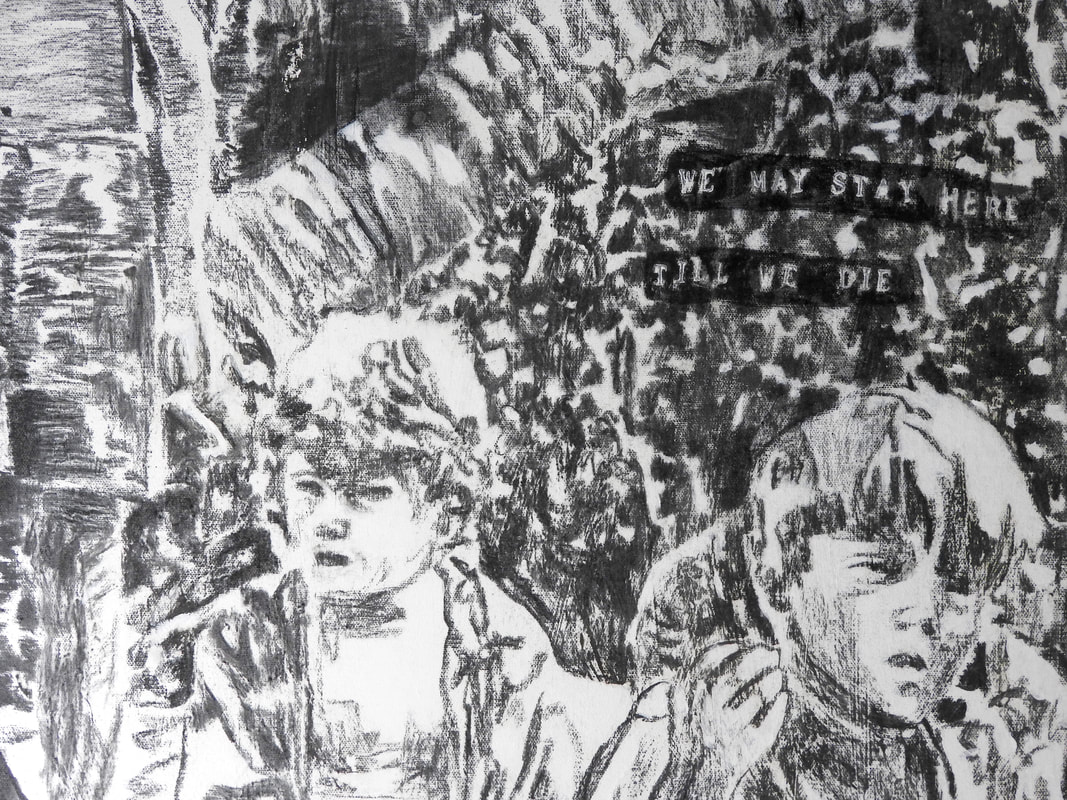
Lord of the Flies (Drawings)
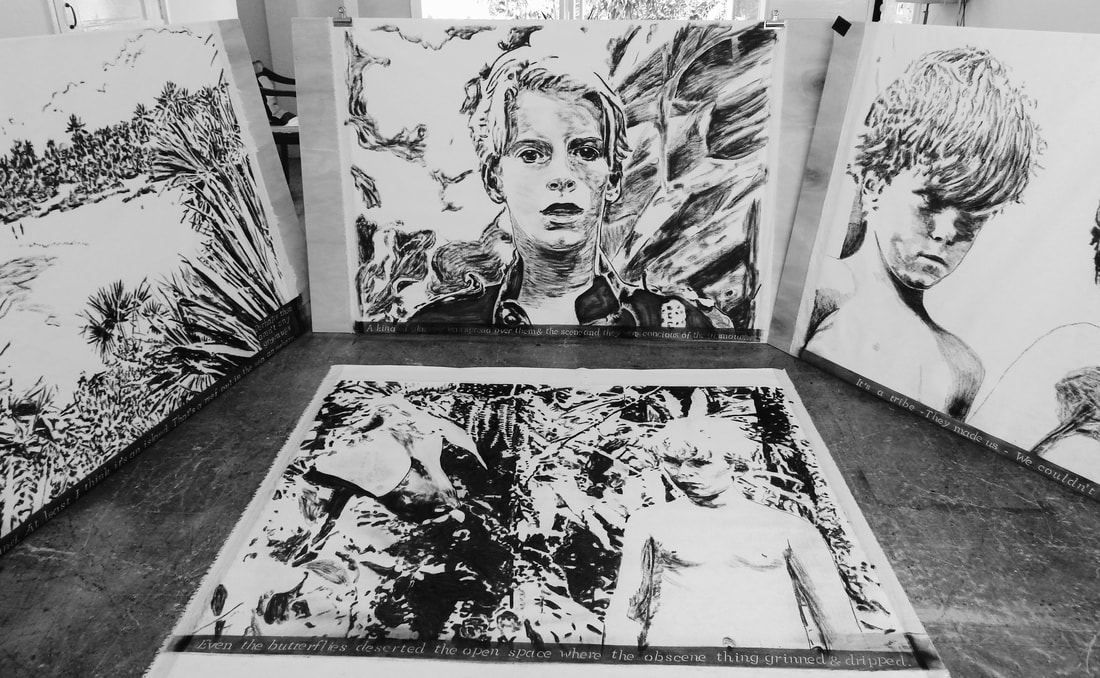
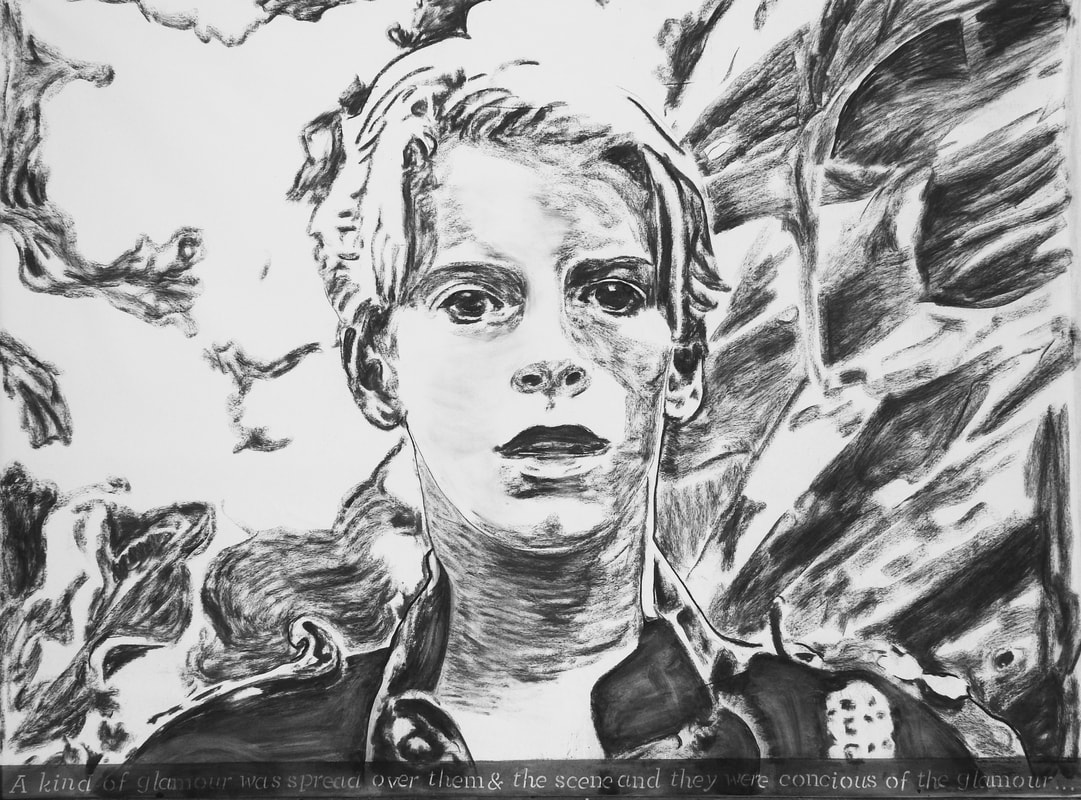
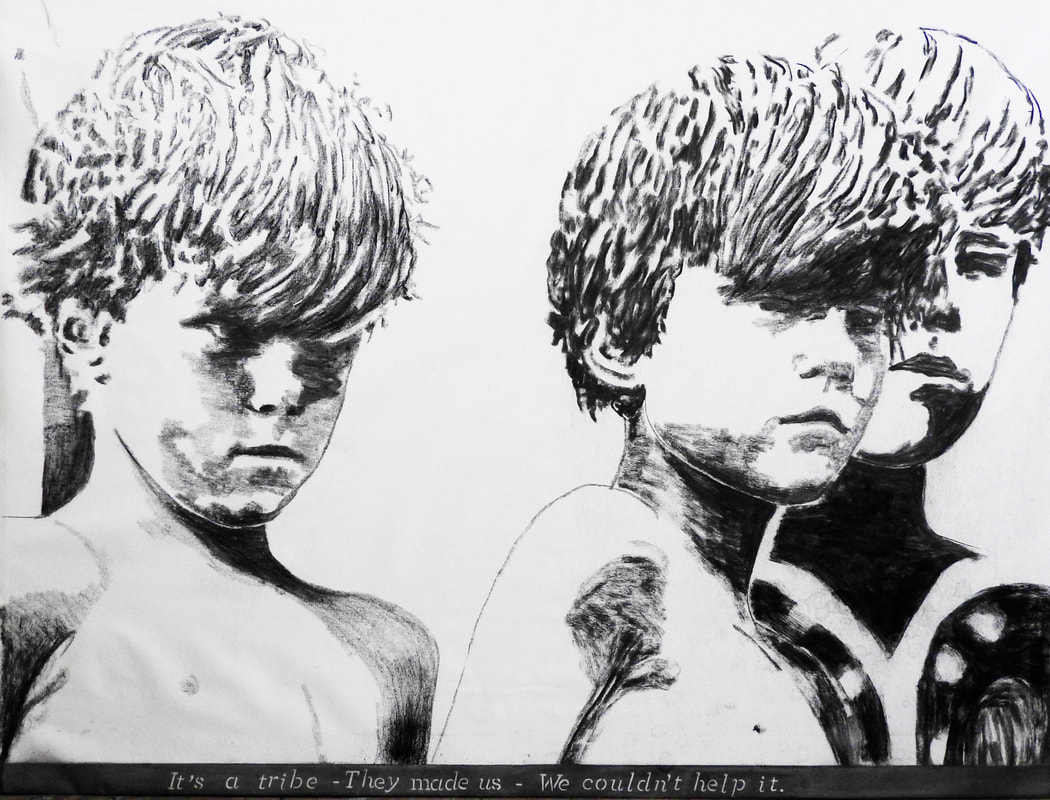
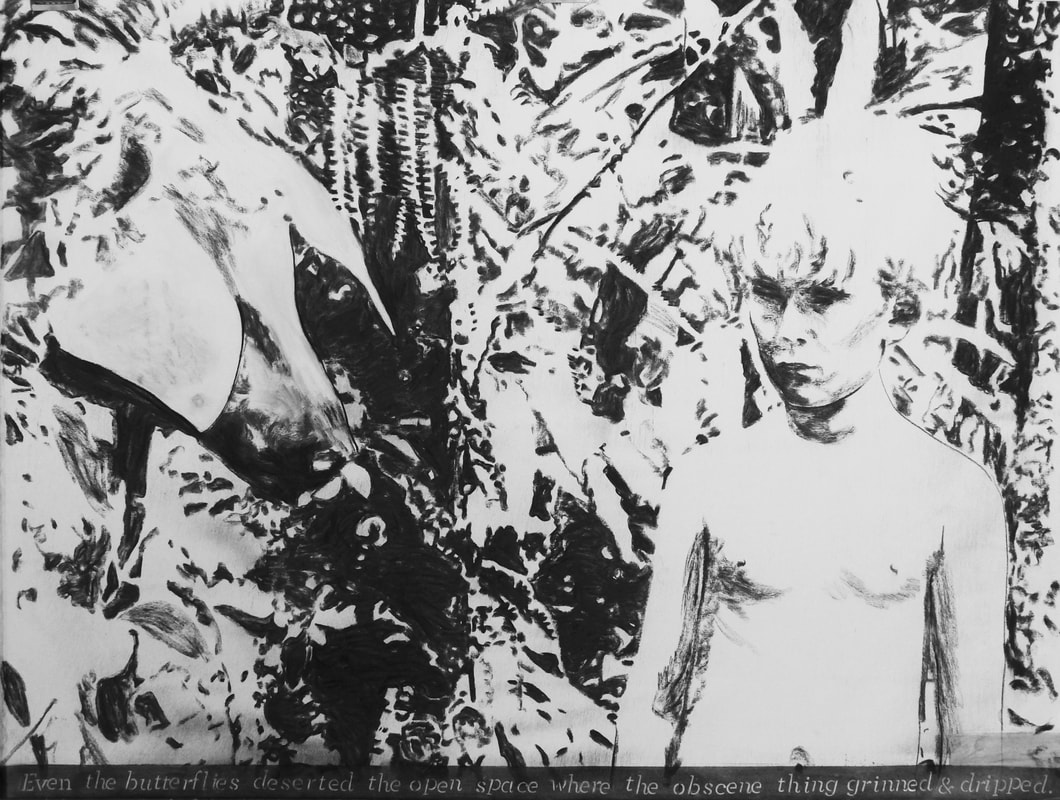
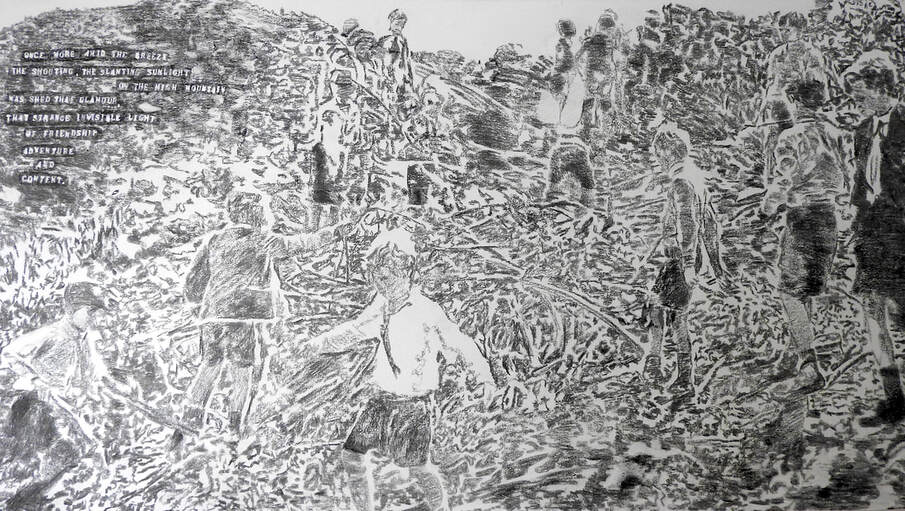
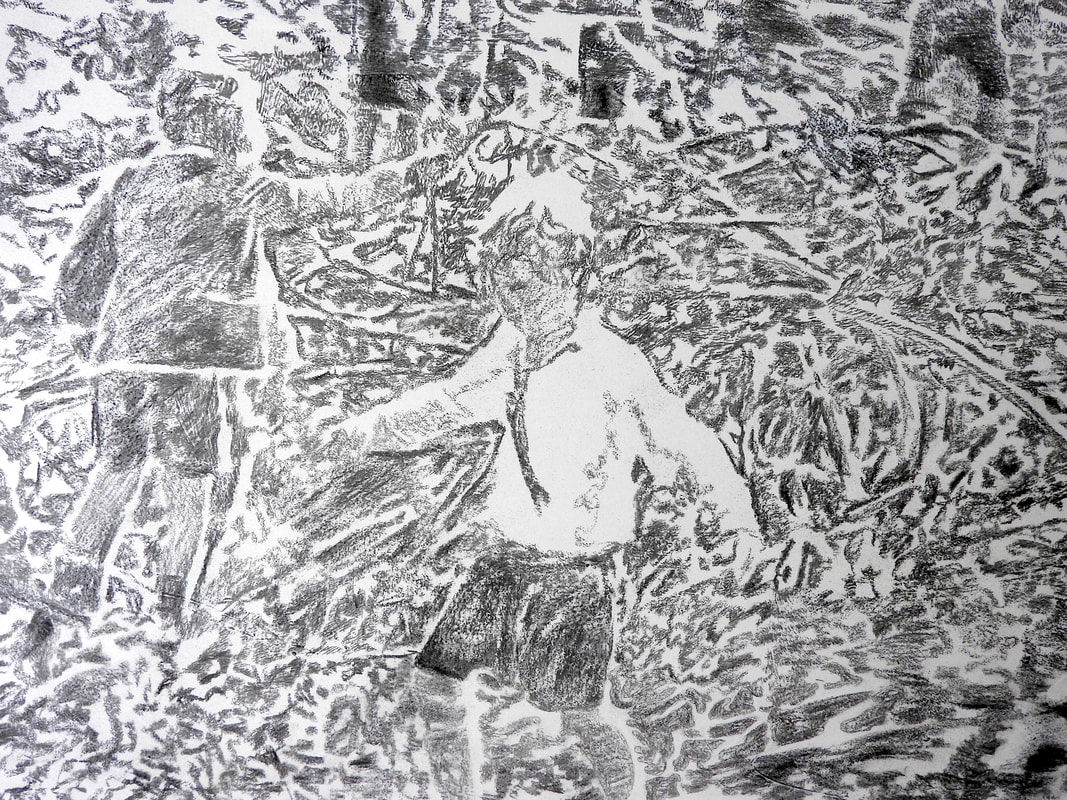
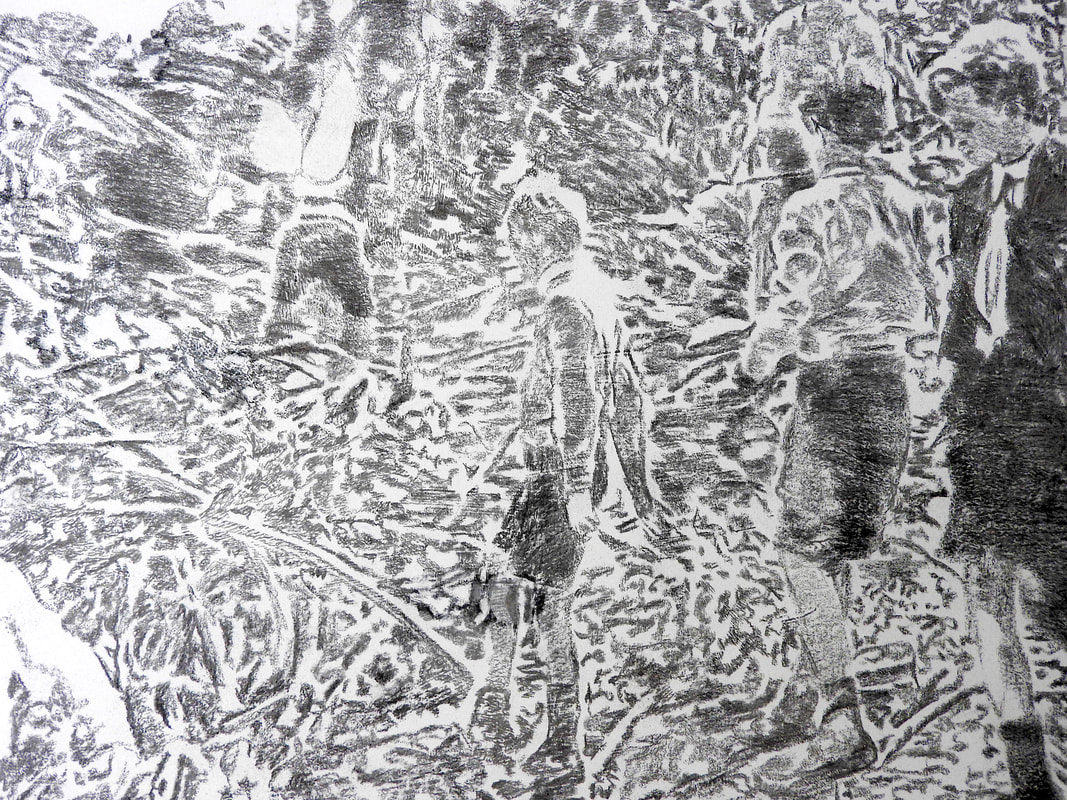
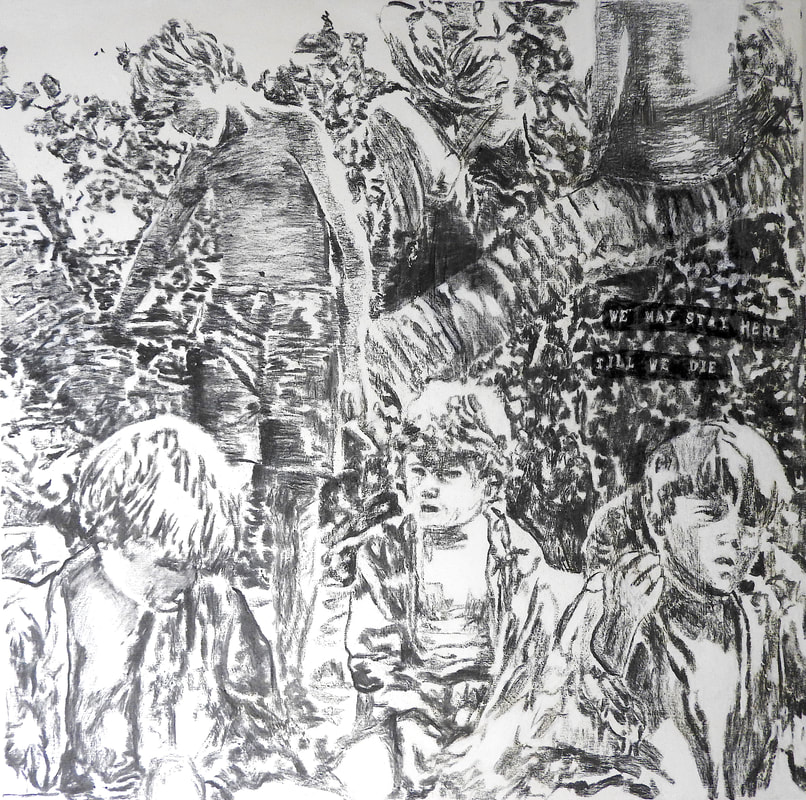
These drawings are based on film stills from Lord of the Flies, the 1954 novel by William Golding (adapted in 1963 and 1990).
At first glance, the setting feels utopian: an uninhabited island, a group of children, the promise of freedom. But beneath this image of paradise lies a darker narrative. Isolated from society, the boys descend into savagery—turning innocence into violence, order into chaos.
The work plays with this tension. The island suggests paradise, the children suggest purity—but neither can be trusted. What appears idyllic is already unraveling.
The titles act as subtle disruptions. They guide the viewer beyond the first impression, reframing the image and inviting a second look—one that questions what is seen, and what has been left unseen.
These drawings are based on film stills from Lord of the Flies, the 1954 novel by William Golding (adapted in 1963 and 1990).
At first glance, the setting feels utopian: an uninhabited island, a group of children, the promise of freedom. But beneath this image of paradise lies a darker narrative. Isolated from society, the boys descend into savagery—turning innocence into violence, order into chaos.
The work plays with this tension. The island suggests paradise, the children suggest purity—but neither can be trusted. What appears idyllic is already unraveling.
The titles act as subtle disruptions. They guide the viewer beyond the first impression, reframing the image and inviting a second look—one that questions what is seen, and what has been left unseen.
the island
monoprints
a selection
Monoprints on Paper, 2019
40 × 40 cm
Part of The Island Series—which also includes large-scale charcoal drawings and an ongoing video work—these prints are based on film stills from Lord of the Flies, the novel by William Golding. The titles are taken directly from the book.
The series plays with familiar associations: children as symbols of innocence, and the deserted tropical island as paradise. Combined, they suggest an ideal world—but the reality is far more unsettling.
These images are not simple scenes of adventure. Beneath the surface lies a gradual unraveling: decay, destruction, hysteria, panic.
Rendered with a near-photographic quality, the prints hover between reality and fiction. Photography and film often claim truth; drawing, by contrast, openly constructs it. By translating film stills into drawings, the images are pulled into a self-contained, invented world—one that feels real, yet remains fundamentally unstable.
As stills, they isolate a single moment, leaving what comes before and after to the viewer’s imagination. Together, they form a fragmented, cinematic narrative—suggestive rather than complete.
The titles play a crucial role. They guide interpretation, but also disrupt it. What you read and what you see do not fully align, creating a subtle tension that invites doubt, curiosity, and a second look.
What appears clear at first glance begins to shift—revealing how easily an image can mislead.
40 × 40 cm
Part of The Island Series—which also includes large-scale charcoal drawings and an ongoing video work—these prints are based on film stills from Lord of the Flies, the novel by William Golding. The titles are taken directly from the book.
The series plays with familiar associations: children as symbols of innocence, and the deserted tropical island as paradise. Combined, they suggest an ideal world—but the reality is far more unsettling.
These images are not simple scenes of adventure. Beneath the surface lies a gradual unraveling: decay, destruction, hysteria, panic.
Rendered with a near-photographic quality, the prints hover between reality and fiction. Photography and film often claim truth; drawing, by contrast, openly constructs it. By translating film stills into drawings, the images are pulled into a self-contained, invented world—one that feels real, yet remains fundamentally unstable.
As stills, they isolate a single moment, leaving what comes before and after to the viewer’s imagination. Together, they form a fragmented, cinematic narrative—suggestive rather than complete.
The titles play a crucial role. They guide interpretation, but also disrupt it. What you read and what you see do not fully align, creating a subtle tension that invites doubt, curiosity, and a second look.
What appears clear at first glance begins to shift—revealing how easily an image can mislead.
Castaway; the Island
video about 60 mins
(work in progress)
A contemporary take on a combination of classic castaway adventure novels and films.
The protagonist is castaway on a deserted island and slowly makes discoveries that make her question religion, society and herself.
.
A film about childhood dreams, longings and beliefs
lost in a world altered by human existence due to the conversion of nature,
to man made environments and industrialisation.
The protagonist created a world of solace and relief by escaping reality and feeling into her rich world of creativity and imagination, casting away all that doesn't fit the dream of paradise. But how long can one hold that up ?
In this video work, I play the main character who is lost at sea and washes up on this uninhabited island. The texts spoken by me, are texts taken from novels and films; Robinson Crusoe, Lord of the Flies, the Blue Lagoon and Pincher Martin. I use the texts from these books and films because they shaped me in my childhood towards a dream of living on a tropical paradise island, and maybe, probably had such an impact that these popular adventure stories made me leave my home country and live far away here in South East Asia since 1999.
In a way, the film is a self portrait.
Teaser & excerpts of the video;
vimeo.com/865006513?share=copy
vimeo.com/864314045?share=copy
vimeo.com/864312896?share=copy
vimeo.com/864311500?share=copy
The protagonist is castaway on a deserted island and slowly makes discoveries that make her question religion, society and herself.
.
A film about childhood dreams, longings and beliefs
lost in a world altered by human existence due to the conversion of nature,
to man made environments and industrialisation.
The protagonist created a world of solace and relief by escaping reality and feeling into her rich world of creativity and imagination, casting away all that doesn't fit the dream of paradise. But how long can one hold that up ?
In this video work, I play the main character who is lost at sea and washes up on this uninhabited island. The texts spoken by me, are texts taken from novels and films; Robinson Crusoe, Lord of the Flies, the Blue Lagoon and Pincher Martin. I use the texts from these books and films because they shaped me in my childhood towards a dream of living on a tropical paradise island, and maybe, probably had such an impact that these popular adventure stories made me leave my home country and live far away here in South East Asia since 1999.
In a way, the film is a self portrait.
Teaser & excerpts of the video;
vimeo.com/865006513?share=copy
vimeo.com/864314045?share=copy
vimeo.com/864312896?share=copy
vimeo.com/864311500?share=copy
the island
photography
a selection
He who created the original paradise, promised to restore what was lost
Pulau Belakang Mati - Sentosa
2018 A deserted tropical island. A setting which is utopian. The idea of paradise on earth is one that originates back to the Bible; the Garden of Eden before the fall of men.
Paradise islands are highly desirable places. But does paradise exist ? How can we know that paradise on earth is not a fantasy, but reality ?
In this series of works I photographed man made tropical islands, created just for you, made to please.
It shows nature, which when taking a closer look, is not nature at all, it’s fake.
I photographed the hollow rocks at an island in Singapore formerly known as "Pulau Belakang Mati" which literally translates as "Island of Death from behind". The island was redeveloped in 1972 by the Singapore government and renamed "Sentosa" which translates to peace and tranquility. Sentosa, was made to please.
The hollow rocks, disintegrated in time, decaying, empty shells held up by plastic pipes, some about to collapse, are a symbol for a paradise lost. Paradise as utopia. The fantasy of paradise on a collision course with reality. The island no longer a place of exotic, idealistic dreams, but a more interior, darker, dystopian place.
The title refers to two things;
-Firstly it refers to the Bible, God who created paradise, pronounced a curse on Adam and Eve after they committed sin and He casts them out of the Garden of Eden. However, after a life living out the teachings of Christ, the kingdom of heaven is once again promised. (paradise lost- paradise regained)
-The title also refers to the idea that 'paradise' is a man made concept. Paradise is often seen as a tropical deserted island where all is good and innocence prevails. Man here takes the role of "God" by creating paradisiacal landscapes, with artificial materials, which over time collapse (paradise found-paradise lost) and will most likely be restored over time.
Pulau Belakang Mati - Sentosa
2018 A deserted tropical island. A setting which is utopian. The idea of paradise on earth is one that originates back to the Bible; the Garden of Eden before the fall of men.
Paradise islands are highly desirable places. But does paradise exist ? How can we know that paradise on earth is not a fantasy, but reality ?
In this series of works I photographed man made tropical islands, created just for you, made to please.
It shows nature, which when taking a closer look, is not nature at all, it’s fake.
I photographed the hollow rocks at an island in Singapore formerly known as "Pulau Belakang Mati" which literally translates as "Island of Death from behind". The island was redeveloped in 1972 by the Singapore government and renamed "Sentosa" which translates to peace and tranquility. Sentosa, was made to please.
The hollow rocks, disintegrated in time, decaying, empty shells held up by plastic pipes, some about to collapse, are a symbol for a paradise lost. Paradise as utopia. The fantasy of paradise on a collision course with reality. The island no longer a place of exotic, idealistic dreams, but a more interior, darker, dystopian place.
The title refers to two things;
-Firstly it refers to the Bible, God who created paradise, pronounced a curse on Adam and Eve after they committed sin and He casts them out of the Garden of Eden. However, after a life living out the teachings of Christ, the kingdom of heaven is once again promised. (paradise lost- paradise regained)
-The title also refers to the idea that 'paradise' is a man made concept. Paradise is often seen as a tropical deserted island where all is good and innocence prevails. Man here takes the role of "God" by creating paradisiacal landscapes, with artificial materials, which over time collapse (paradise found-paradise lost) and will most likely be restored over time.
Natural Selection
Natural selection;
‘The whole island with it’s sloping border, was adorned with an air of perfect elegance; the scenery, if I may use such an expression, appeared to the sight, harmonious.’
(from Charles Darwin;The voyage of the Beagle)
scratching, oilpaint on board.
40 x 180 cm
‘The whole island with it’s sloping border, was adorned with an air of perfect elegance; the scenery, if I may use such an expression, appeared to the sight, harmonious.’
(from Charles Darwin;The voyage of the Beagle)
scratching, oilpaint on board.
40 x 180 cm
Natural selection
&
Castaway series
&
Castaway series
Natural selection;
‘Little imagination is required to fancy that so light and delicate a body must be tenanted by some wandering fairy spirit.’
(from Charles Darwin; The voyage of the Beagle.)
scratching, oilpaint on round board, 20 x 20 cm
Both works refer to Charles Darwin’s research on the theory of evolution. The long oil-paint wooden panel, has ‘my paradise island’ depicted, the little round one has a bird on it, a yellow crusted cockatoo.
The series actually, truly shows a fake island (man made and deliberately devoid of background; no industry and ships are to be seen), and a yellow crusted cockatoo, an introduced bird species.
Yet, we’d perceive this imagery mostly as harmless, peaceful and even paradisiacal. You think you see Eden, but what you see is a troubled world, out of context, where things are not always as it seem, where that pretty cockatoo might actually be a thread to indigenous wildlife.
Yet, as life evolves always, adjusts, evolution continues…one could question if this is evolution too ?
The artist as amateur naturalist, wondering if man can act as God, (by creating an deserted paradisiacal island) aiming to create Eden. If ‘man made’ is part of evolution also, as man is part of nature.
The titles are from Darwin's book 'The voyage of the Beagle'.
I call it 'Natural Selection', a reference to Charles Darwin's research on the theory of evolution.
‘Little imagination is required to fancy that so light and delicate a body must be tenanted by some wandering fairy spirit.’
(from Charles Darwin; The voyage of the Beagle.)
scratching, oilpaint on round board, 20 x 20 cm
Both works refer to Charles Darwin’s research on the theory of evolution. The long oil-paint wooden panel, has ‘my paradise island’ depicted, the little round one has a bird on it, a yellow crusted cockatoo.
The series actually, truly shows a fake island (man made and deliberately devoid of background; no industry and ships are to be seen), and a yellow crusted cockatoo, an introduced bird species.
Yet, we’d perceive this imagery mostly as harmless, peaceful and even paradisiacal. You think you see Eden, but what you see is a troubled world, out of context, where things are not always as it seem, where that pretty cockatoo might actually be a thread to indigenous wildlife.
Yet, as life evolves always, adjusts, evolution continues…one could question if this is evolution too ?
The artist as amateur naturalist, wondering if man can act as God, (by creating an deserted paradisiacal island) aiming to create Eden. If ‘man made’ is part of evolution also, as man is part of nature.
The titles are from Darwin's book 'The voyage of the Beagle'.
I call it 'Natural Selection', a reference to Charles Darwin's research on the theory of evolution.
Castaway series
Perception. Creating my own world.
Paradise, as an idea, depends on what we choose not to see.
In the works depicted here, the island is the same, yet the backdrop of all the large industry, makes it an entirely different island all of a sudden. Seeing the background depicted, destabilizes the imaginary of the viewer. It redefines the place. The myth of paradise, which for many could be represented by a deserted tropical island, seen with this actual backdrop of the industrial world, creates a surprise of strangeness and shows the complex relationship I/we have with the real. The two worlds depicted here in the reality of the island, seem to not belong together, as they seem worlds apart.
A bold confrontation of globalisation, overturning preconceptions and stereotypes.
Based on film stills from my video work "Castaway; the island".
In the works depicted here, the island is the same, yet the backdrop of all the large industry, makes it an entirely different island all of a sudden. Seeing the background depicted, destabilizes the imaginary of the viewer. It redefines the place. The myth of paradise, which for many could be represented by a deserted tropical island, seen with this actual backdrop of the industrial world, creates a surprise of strangeness and shows the complex relationship I/we have with the real. The two worlds depicted here in the reality of the island, seem to not belong together, as they seem worlds apart.
A bold confrontation of globalisation, overturning preconceptions and stereotypes.
Based on film stills from my video work "Castaway; the island".
Paradise, as an idea, depends on what we choose not to see.
In the works depicted here, the island is the same, yet the backdrop of all the large industry, makes it an entirely different island all of a sudden. Seeing the background depicted, destabilizes the imaginary of the viewer. It redefines the place. The myth of paradise, which for many could be represented by a deserted tropical island, seen with this actual backdrop of the industrial world, creates a surprise of strangeness and shows the complex relationship I/we have with the real. The two worlds depicted here in the reality of the island, seem to not belong together, as they seem worlds apart.
A bold confrontation of globalisation, overturning preconceptions and stereotypes.
Based on film stills from my video work "Castaway; the island".
In the works depicted here, the island is the same, yet the backdrop of all the large industry, makes it an entirely different island all of a sudden. Seeing the background depicted, destabilizes the imaginary of the viewer. It redefines the place. The myth of paradise, which for many could be represented by a deserted tropical island, seen with this actual backdrop of the industrial world, creates a surprise of strangeness and shows the complex relationship I/we have with the real. The two worlds depicted here in the reality of the island, seem to not belong together, as they seem worlds apart.
A bold confrontation of globalisation, overturning preconceptions and stereotypes.
Based on film stills from my video work "Castaway; the island".